

The Slöjd Lounge
A sofa, a bench or a piece of whimsical weirdness?

Some slöjd objects leave a deeper impression than others. They linger in the mind as more significant. This may have to do with the color combinations. It may have to do with the shape. It may have to do with the sketch conveying the right feeling. It often has to do with the fibers of the material triggering a shape that I myself could never have thought of. It is often difficult to pinpoint why that feeling of satisfaction lingers for many years.
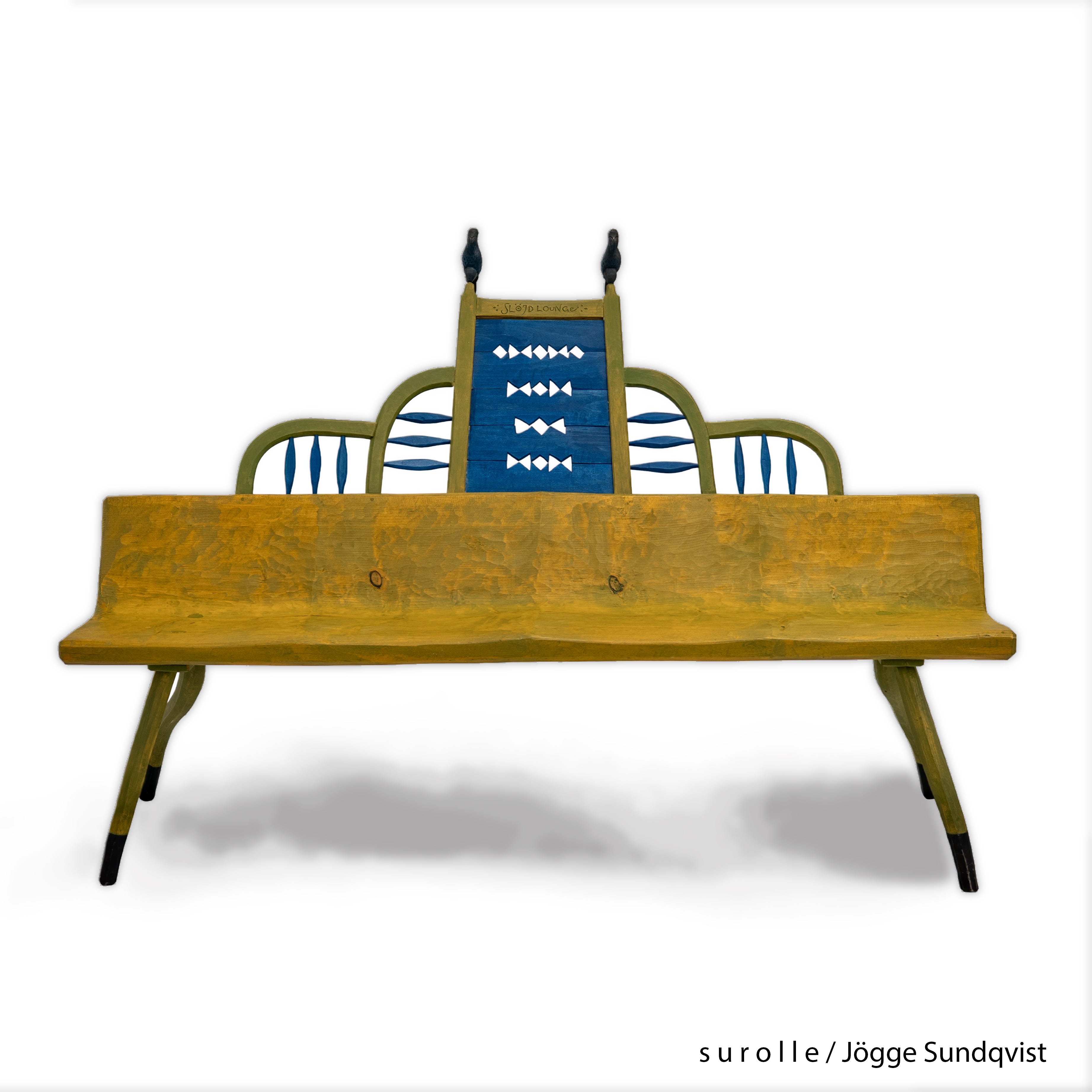
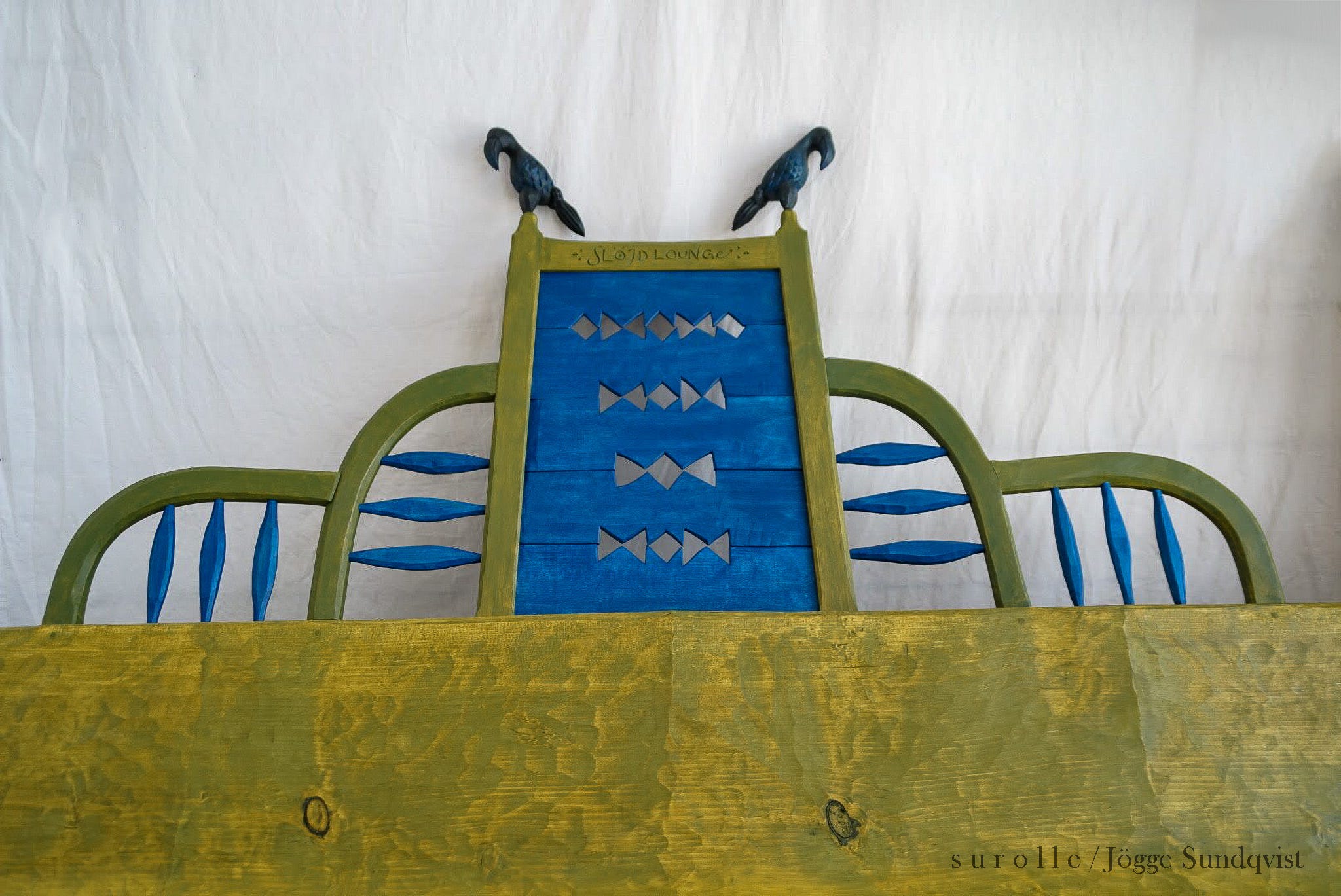
The Slöjd lounge is one of those objects that has sparked a little. It has now been sold to Sunderbyns Folkhögskola to stand in the lobby of their hotel and conference center. Honourable – a great location!
Is it a bench with a backrest or is it a sofa? It’s hard to say, so I decided to call it the Slöjdlounge. The seat and part of the protruding backrest are made of homogeneous spruce. The material was actually much larger. I got it from my father in Högland. They had felled a huge spruce tree nearby, and the neighbour had used his backhoe to transport it to Willes’ place. I think the material was a little too big for him to handle; he was in his 80s at the time, so when he asked if I wanted it, I didn’t hesitate to say yes. I had a public commission project for Sunne municipality in the works and wanted to make an outdoor bench. Spruce is relatively rot-resistant, which made it a good choice. In addition, the lower part was largely free of knots. That would definitely make it easier to cut it smoothly, or “clean cut” as I call it.
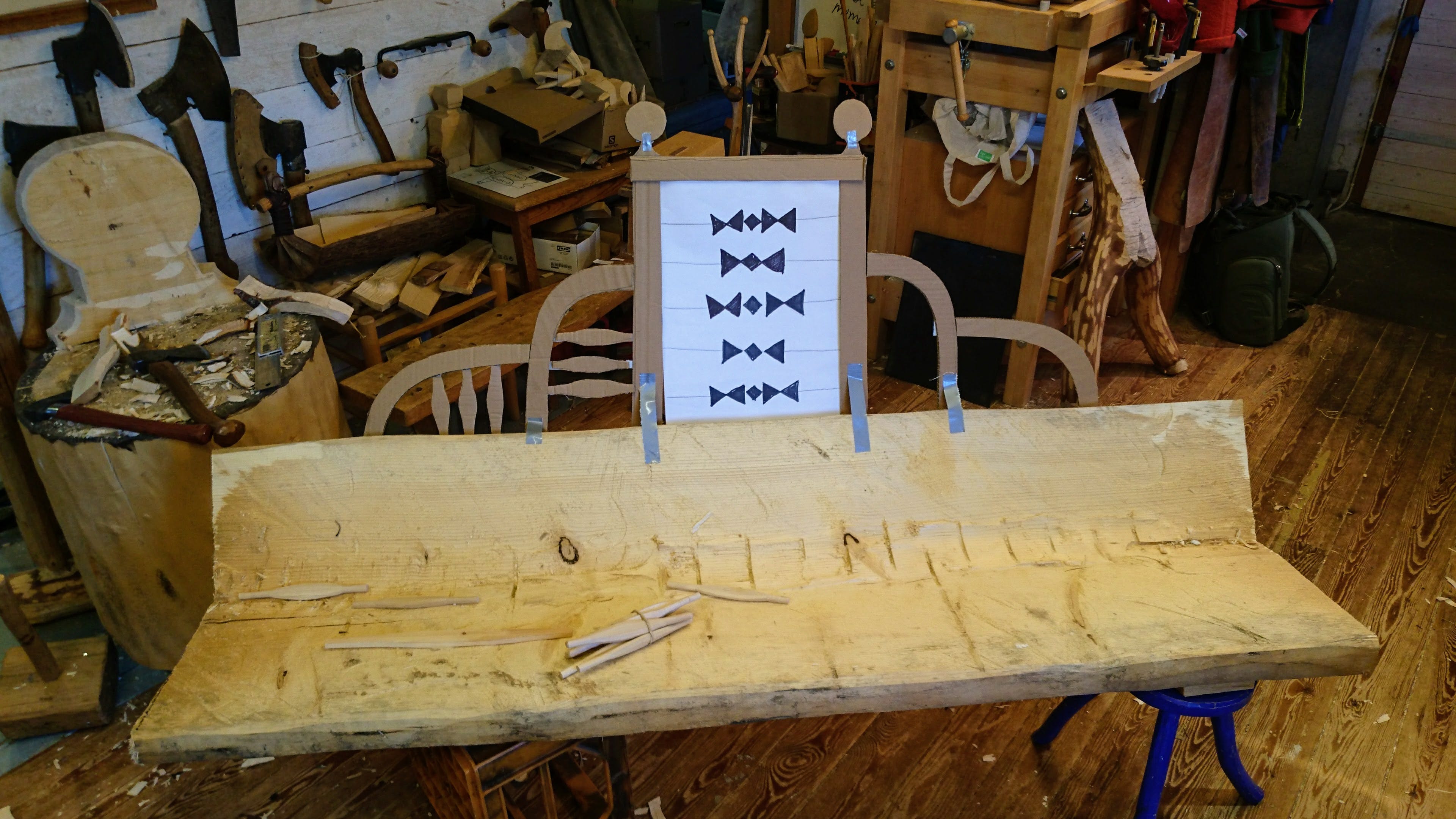
When I used a chainsaw to cut out the characteristic shape of the Sunnebänken bench, a model I made for Umeå Airport in several variations, I was left with another seat with an angled back, about 40 mm thick, which had potential. The problem was the knots. The reason the surface wood was knot-free was that someone had pruned the lower part when the tree was younger, and as the tree grew and “covered” them, the surface wood became smooth and fine.
The leftover piece of wood lay in the shed for a few years until one day, while sketching, I had a brilliant idea: to insert sliding dovetails to secure the legs in the seat and sliding dovetails into the complex back piece for reinforcement.
Some of you may be familiar with my signature style and my great love of working with crooked wood. In this sketch, I was able to express the strength and beauty of the crooked. I have collected some material over the years, a few hundred barked dry hooks lie in the shed, sorted into different categories, and they are calling out to me! Once I had found four subjects, I had to fine-tune the sketch a little, then make templates to test on a 1:1 scale, adjust a little more, and then slöjd it.
The rectangular backrest uprights with sliding dovetails were grooved in the back by an intern from Malmsten’s workshop school. Olle Rosenqvist had heard about my summer program on P1 in 2015 and wanted to get some inspiration. An exemplary, skilled, and meticulous young man who I think did it much better than I would have done myself.

It was tricky and fun to fit in the crooked angles, not exactly easy, but the challenge was half the fun.
The back plates in the frame are made like miniature shift work. The thin, carved boards, the slats, lie loosely in a groove in the frame construction, much like a mirror in a door. The pattern with rhombuses and horizontal hourglasses is a common element in my pattern book, symbolizing eternity and life.
But that was a piece of cake compared to cutting the seat and back surfaces cleanly. It was pure hell, plain and simple, which I hadn’t really anticipated. The long-fiber spruce had significantly more branches than the inner part. Even though I sometimes get carried away and praise myself for my skill with the carving tools, there were sudden, unpredictable outbreaks. For a while, I was about to give up hope of saving the surface, but then I came up with the idea of gently scooping out the surface to create four seats. This made the cutting a little easier, except where the fibers met. I had to grind, sharpen, and hone the gauge until it was super sharp and press the grinding bevel into the wood to gain control. It took two whole days, and that’s just for the clean cut...
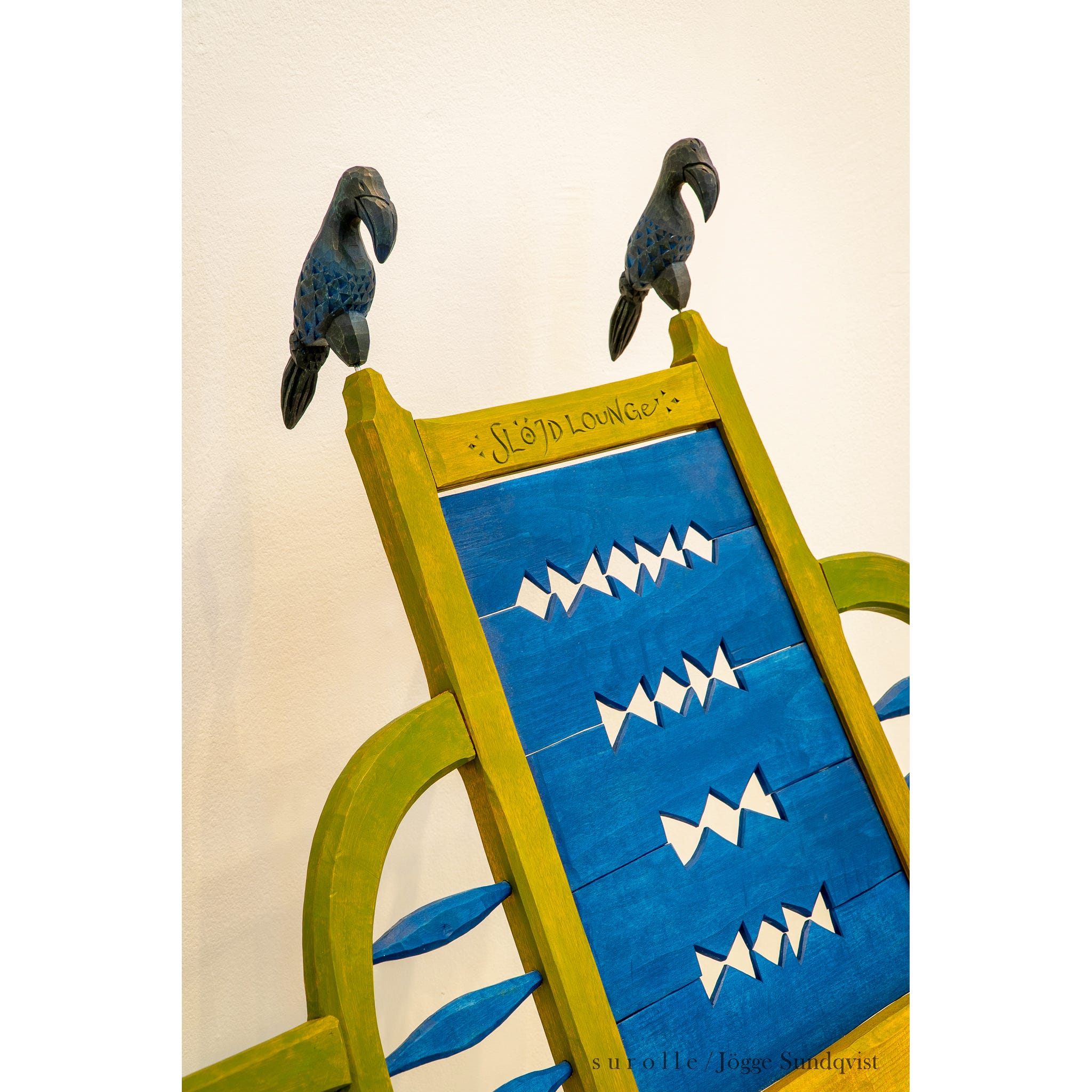
The two ravens at the top sit on removable steel pins, which was practical because I knew it would be moved to various exhibitions throughout Sweden. While sketching, I remembered that Odin’s two ravens, Hugin and Munin, sat on his shoulders. They flew out into the world and acted as spies, then returned home to Valhalla to report back with all their raven wisdom.
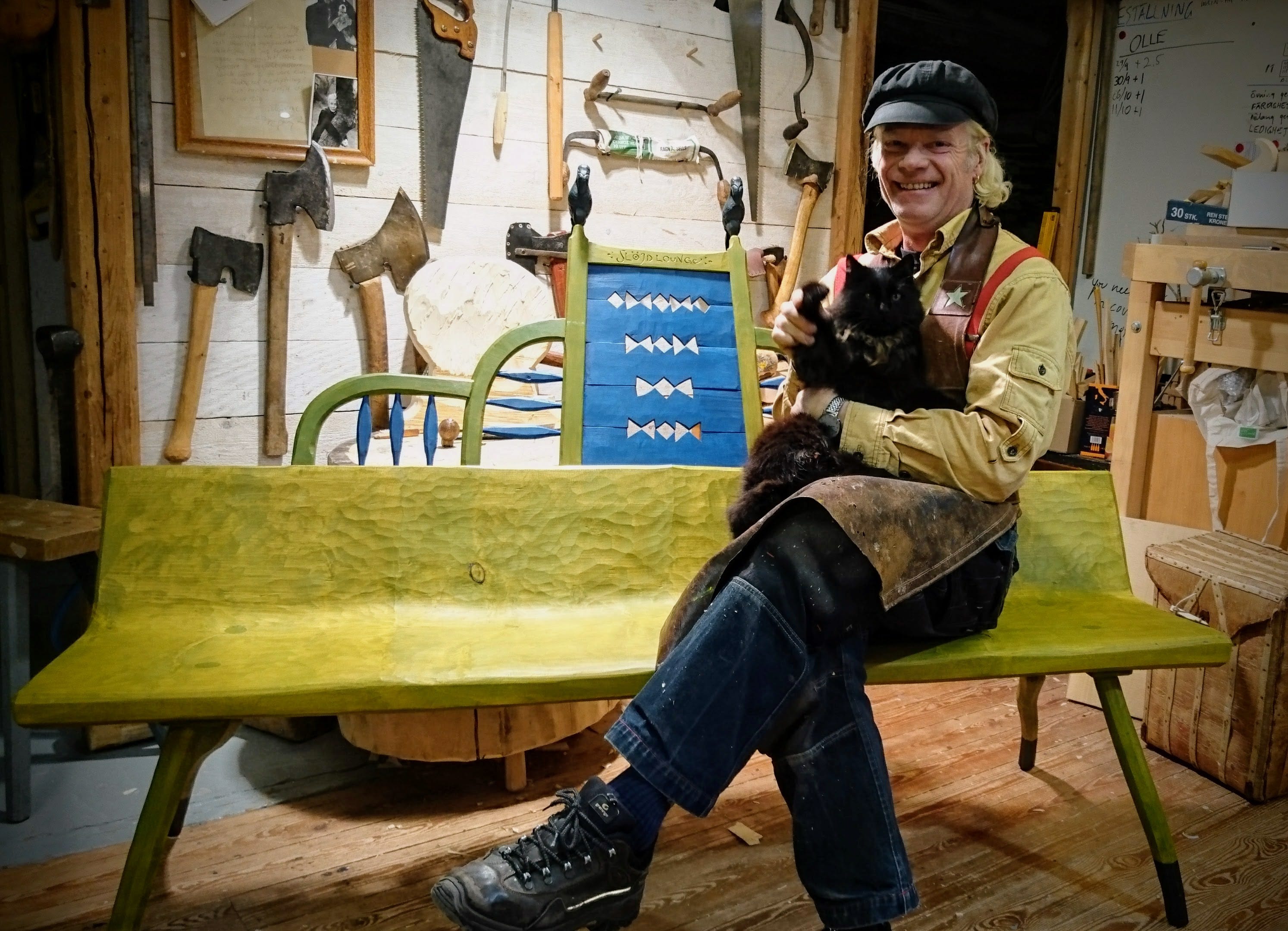
Now I look forward to the reports from the hotel lobby. Perhaps they will caw that the winds are changing and that warm spring breezes are on their way?
I love how in tune your society is with ancient ways where some place like a school or airport will proudly display your beautiful pieces. It wouldn't really happen much here where I live.
Very interesting to see the pictures of the rough wood with the drawings on top, to get more understanding of your design and execution process.
And it's so comforting to read that you also can struggle with hidden problems in wood.
Working two days on just the finishing or the surface... respect for that! 💪🏻
It's a good thing to remember, when I'm working on some piece of wood that totally pushes the limits of my skills.